About the exhibition
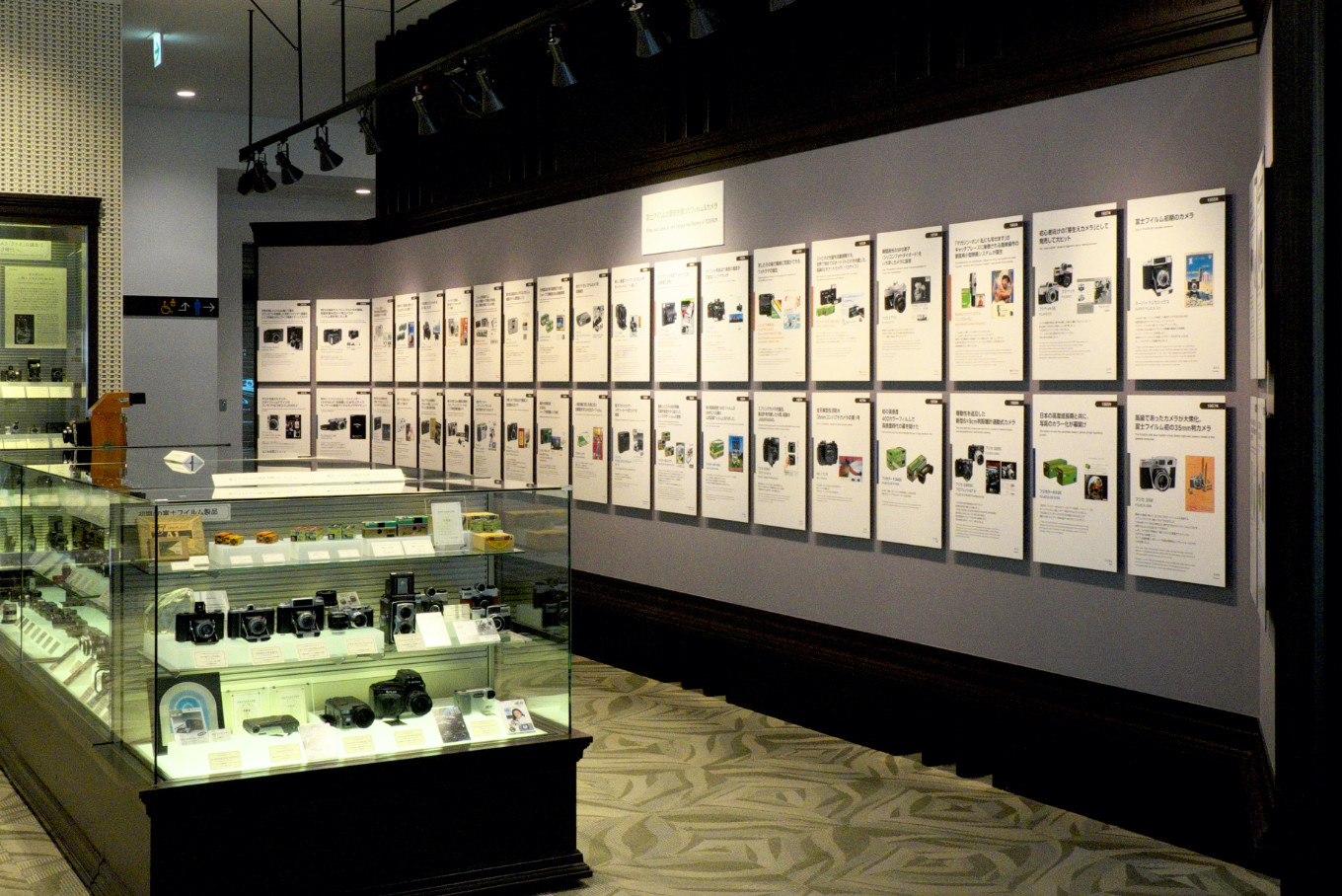
The FUJIFILM SQUARE Photo History Museum is pleased to present How Japan Became a Photography Powerhouse: The Beginnings, a special exhibition that introduces the early history of photography in Japan through objects held in the collection at FUJIFILM Corporation.
Today, we all come across large quantities of photographs on a daily basis, but how did photography arrive in Japan and how did it become so popular? It was through the passion and hard work of our forebears who overcame countless difficulties in the mid- to late 19th century, a time of many social and economic restraints when Western science and technology were still new to Japan.
Photography arrived in Japan about 190 years ago. The world's first viable photography technique, the daguerreotype,*1 was introduced in France in 1839 and is thought to have arrived in Japan on board a Dutch ship docking at Nagasaki in 1848. The Western science of photography was unknown in Japan at the time, but the Tokugawa shogunate and other interested domains commissioned scholars of Western learning, including Kawamoto Kōmin (1810–71), to carry out research and experiments.
Another decade would pass before the switch to the wet collodion process,*2 in the early 1860s made photography viable in Japan. The first professional photographers acquired the skills from foreign photographers who visited Japan after the country opened its border, or from foreign residents familiar with the techniques. From the end of the 1860s onward, Japanese photography culture flourished, building the foundation for the photography powerhouse of the future.
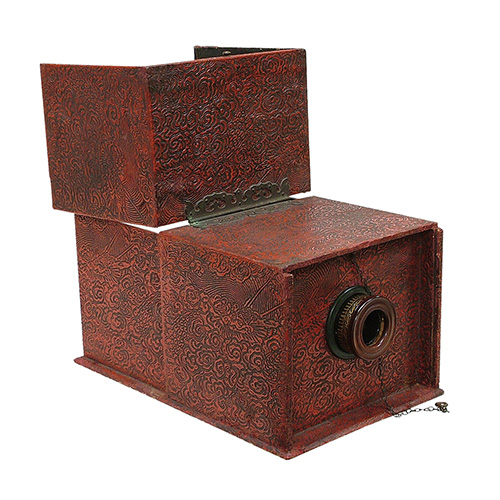
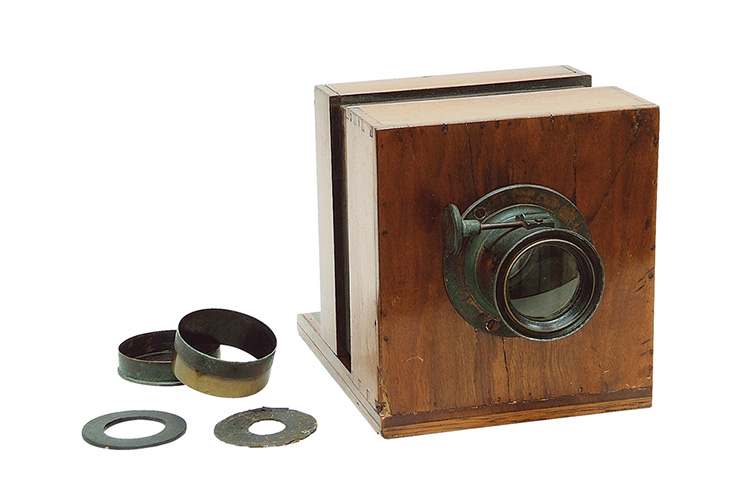
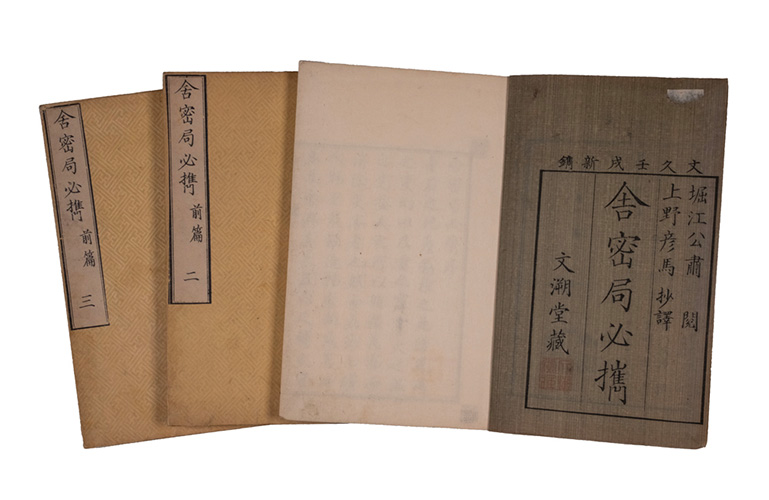
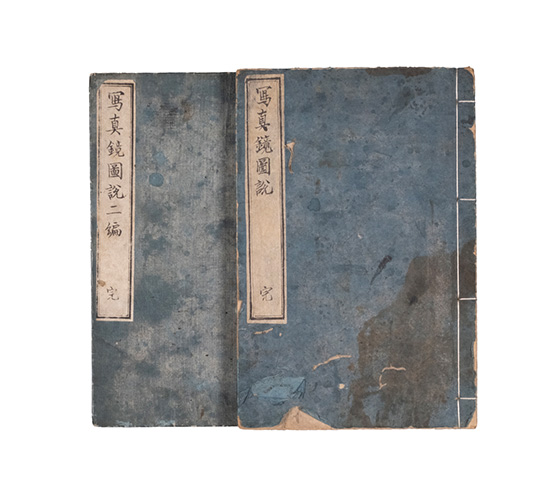
The exhibition introduces the early history of photography in Japan by focusing on works in the FUJIFILM Photo Collection at FUJIFILM Corporation. We have carefully selected approximately 30 items for display, which also include historical photography equipment and valuable documentation related to photography in the mid- to late 19th century held by FUJIFILM Corporation. The exhibition tells the story of how photography arrived in Japan with the help of valuable materials related to photography, such as Japan's oldest extant camera obscura,*3 built in the period from the late 18th century to the middle of the 19th century, and a 19th-century daguerreotype camera. The displays also include the Seimikyoku hikkei handbook on chemistry (1862) by Ueno Hikoma (1838–1904), a pioneer of Japanese photography, and the Shashinkyō zusetsu, the first guide to photography techniques in Japan (translated by Yanagawa Shunsan, 1867–68).
We hope you will enjoy learning about the dawn of the culture of photography in Japan and how Japan became a photography powerhouse that has produced a unique and distinctive culture of photography in the modern era unlike any other in the world.
Notes:
(i) Albumen print
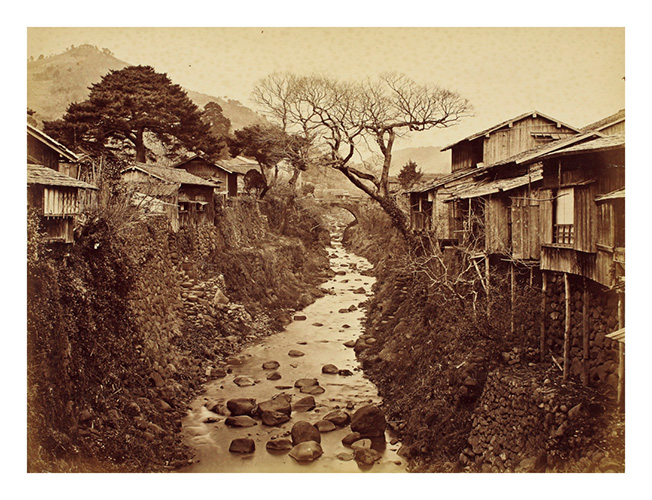
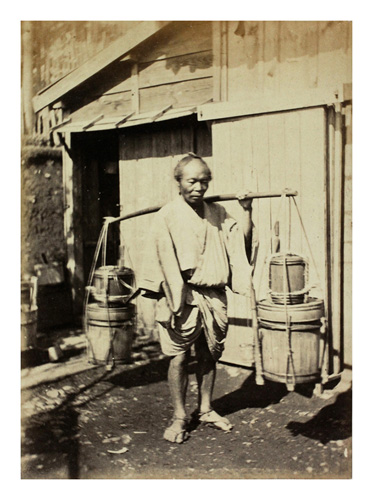
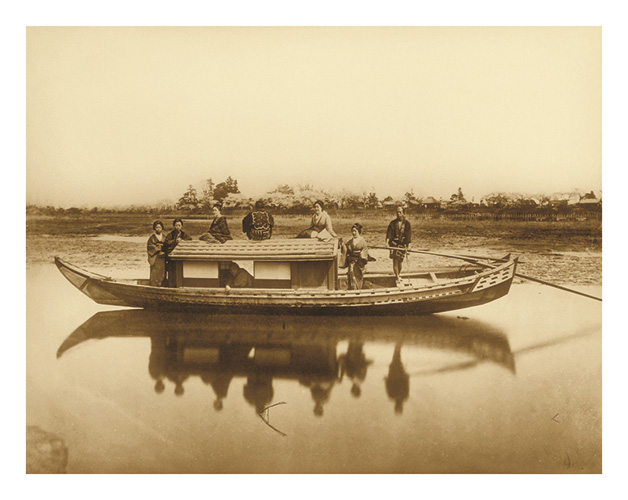
Invented in France in 1850 by Louis Désiré Blanquart-Evrard, albumen prints use egg whites (albumen) as the binder for the photosensitive material. A piece of paper is coated with an emulsion of albumen and chloride. To ready the paper for use, it is floated on a solution of silver nitrate to make it photosensitive. The image is developed by placing a negative on the paper and exposing it to strong light without any further processing. Combining albumen prints with the wet collodion process or gelatin dry plates became the standard photography technique in the late 19th century and remained in wide use until the early 20th century. The characteristics of albumen prints are clarity of detail, a unique gloss provided by the albumen coating, and beautiful sepia gradation.
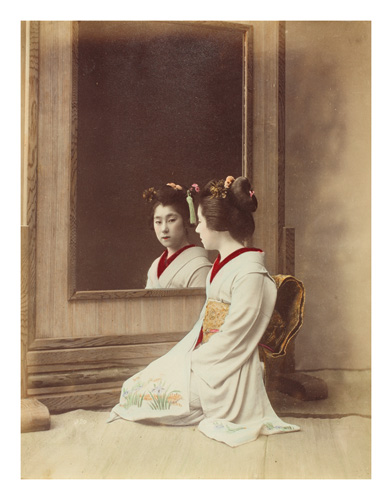
(ii) Hand-colored albumen print
Hand-colored albumen prints are monochrome photographs printed on albumen paper and colored by hand. Although there are variations depending on the photograph, the artists hired to do the coloring were probably Japanese painters who used the same pigments and dyes as the ones they used to create traditional Japanese paintings.
(iii) Gelatin dry plate
A dry plate is a glass support medium coated with a photosensitive material that can be used in a dry state. When modern photosensitive materials replaced the wet collodion process, photographers no longer needed to prepare their own sensitized plates on site, which rapidly expanded the range of subjects for photographers and their area of activities. In 1871, the Englishman Richard Leach Maddox was the first to bring out a dry plate coated with a silver bromide gelatin emulsion. Later, a method of increasing sensitivity by ripening the emulsion was also invented. As of the 1880s, highly sensitive dry plates were manufactured on an industrial scale, building the foundations for the rise of the photography industry in the 20th century. Photographic film was developed based on gelatin dry plates. In 1934, Fuji Photo Film Co., Ltd. (currently, FUJIFILM Holdings Corporation) was established to produce photographic film in Japan.
*1 Daguerreotype
In 1839, the Frenchman Louis Jacques Mandé Daguerre unveiled the daguerreotype, the world's first viable photography technique. In Japan, the daguerreotype is known as ginban shashin (literally, silver-plate photography). To create a daguerreotype, a copper plate is coated with silver and polished to a mirrorlike finish. The plate is then exposed to iodine vapor to create a photosensitive silver halide layer on the surface. To take the picture, the plate is inserted in the camera and exposed. The image is then developed by exposing the plate to mercury vapor before fixing. Although the processed mirror-like plate is reversed left-to-right, it is appreciated for the clarity and beauty of the image. As soon as the daguerreotype was introduced, the technique spread rapidly in the West where it was particularly widely used for portraits. In Japan, however, the technique never went beyond research and experimentation. The only extant daguerreotype in Japan is a portrait of Shimazu Nariakira, a feudal lord of the Satsuma domain. It was taken in 1857 and is designated as an important cultural property of Japan.
*2 Wet collodion process
Developed by the Englishman Frederick Scott Archer in 1851, this photographic technique uses a glass plate as the support medium. Iodide and bromide are added to collodion, which is used to coat the glass plate. When the prepared plate is immersed in a silver nitrate solution, light-sensitive silver halide forms in the collodion coat. Since the plate loses its sensitivity to light when it dries, the image must be captured and processed while the plate is wet. The technique was used for more than 30 years until the late 19th century. In Japan, photography became viable with the introduction of the wet collodion process.
*3 Camera obscura
The camera obscura is an optical instrument and a precursor of the photographic camera. In Japan, it was known as a shashinkyō (literally, a photography mirror). “Camera obscura” is Latin and means dark room. Light enters through a small hole in the wall of a darkened space and projects an image onto the opposite wall. Since light travels in a straight line, the image of the outside world is upside down and reversed left to right. The principle has been known since ancient times and many painters from the Renaissance onward have used the camera obscura as a drawing aid.




![[Image]How Japan Became a Photography Powerhouse: The Beginnings](/assets/img/photo_event_260701_05_mv.jpg)
![[image]How Japan Became a Photography Powerhouse: The Beginning](/assets/img/photo_event_260701_05.jpg)
![[image]Kazuyoshi Nomachi Photo Exhibition: SAHARA THE ETERNAL](/assets/img/photo_event_261030_01.jpg)
![[image]Photographs of the Late Edo / Early Meiji Period](/assets/img/photo_event_261101_05.jpg)